Guitar Tunings Explained: Standard, Drop, Open, Slide & Classic Rock Players
Guitar tuning is not only about getting the strings “in tune.” The tuning itself changes the way the instrument feels, the chords that fall naturally under the hand, the range of the low strings, and the type of music the guitar wants to play.
This GLS guide explains common guitar tunings, what they are used for, how to tune to them, which classic rock, blues-rock, Southern rock, and hard rock guitarists are associated with them, and when a tuning change may require setup work.
Quick Answer: Why Guitarists Use Different Tunings
- Standard tuning is the most flexible general-purpose tuning.
- Half-step down and whole-step down reduce string tension and lower the overall pitch.
- Drop tunings make heavy one-finger power chords easier and give the guitar a lower root note.
- Open tunings tune the strings to a chord, making slide guitar, drones, and open-string rhythm parts easier.
- DADGAD and modal tunings create suspended, droning, Celtic, folk, and cinematic sounds.
- Experimental tunings are used when the guitarist wants the guitar to stop behaving like a normal guitar.
GLS Note: A guitarist may be associated with a tuning without using it exclusively. Many players use different tunings song by song.
What Is a Guitar Tuning?
A tuning is the set of pitches assigned to the open strings. Standard 6-string guitar tuning is E A D G B E from low to high. Alternate tunings change one or more strings to make different chord shapes, ranges, drones, or playing techniques possible.
Common Tunings Overview
| Tuning | Low-to-High Notes | Common Use | Associated Guitarists / Bands |
|---|---|---|---|
| Standard | E A D G B E | General-purpose guitar tuning for almost every style. | AC/DC, Ted Nugent, Lynyrd Skynyrd, Molly Hatchet, Free/Bad Company-style classic rock, and most general electric/acoustic players. |
| Half-Step Down | Eb Ab Db Gb Bb Eb | Lower tension, darker tone, easier bends, vocal-friendly key shift. | Jimi Hendrix, Stevie Ray Vaughan, Eddie Van Halen, Slash, Kiss examples. |
| Whole-Step Down | D G C F A D | Lower overall pitch, heavier sound, slinkier feel. | Tony Iommi / Black Sabbath and many heavier rock/metal players. |
| Drop D | D A D G B E | Heavy riffs, easy power chords, expanded low range. | Tool, Soundgarden, Foo Fighters, Rage Against the Machine, Led Zeppelin examples. |
| Drop C | C G C F A D | Modern hard rock and metal with lower tension and heavier riffs. | System of a Down, Killswitch Engage, modern metal players. |
| Open G | D G D G B D | Slide, blues, roots rock, big open chords. | Keith Richards, Rich Robinson / Black Crowes, Charlie Starr / Blackberry Smoke, George Thorogood-style blues-rock. |
| Open D | D A D F# A D | Slide guitar, folk, blues, resonant acoustic parts. | Joni Mitchell examples, Elmore James-related slide traditions, Ben Harper-style lap/slide ideas. |
| Open E | E B E G# B E | Slide guitar, blues-rock, big major-chord resonance. | Duane Allman, Derek Trucks, Joe Walsh, Billy Gibbons / ZZ Top slide examples. |
| DADGAD | D A D G A D | Suspended/modal sound, folk, Celtic, acoustic rock, drones. | Jimmy Page / Led Zeppelin, acoustic rock, folk, and modal players. |
| Open C | C G C G C E | Huge open chords, ambient writing, heavy or cinematic acoustic/electric parts. | Devin Townsend, John Butler, heavy/ambient open-tuning players. |
| Nashville / High-Strung | Same names as standard, but lower strings are octave-up strings. | Shimmering doubled acoustic parts and studio layering. | Studio guitarists, Tom Petty / Mike Campbell-style layered acoustic textures. |
| Baritone B Standard | B E A D F# B | Baritone guitar, lower range without extreme floppiness. | Baritone players, surf, metal, film, and studio guitarists. |
Standard and Down Tunings
Standard Tuning: E A D G B E
Standard tuning is the baseline. Most chord shapes, scale patterns, method books, and beginner lessons assume this tuning. It is flexible enough for rock, blues, country, jazz, pop, metal, funk, worship, singer-songwriter material, and general playing.
Half-Step Down: Eb Ab Db Gb Bb Eb
Half-step down lowers every string by one semitone. It slightly reduces tension, makes bends easier, darkens the sound, and can better fit certain vocal ranges. Jimi Hendrix, Stevie Ray Vaughan, Eddie Van Halen, and Slash are strongly associated with half-step-down tuning in many classic recordings and live contexts.
Whole-Step Down: D G C F A D
Whole-step down lowers every string by two semitones. It can produce a darker, heavier sound and a looser feel. Tony Iommi famously used lower tunings with Black Sabbath, partly for sound and partly because lower tension helped him play after his fingertip injury.
How to Achieve It
- Use a chromatic tuner.
- Lower all six strings evenly to the target notes.
- Consider heavier strings if the guitar feels too loose.
- Check intonation and relief if the tuning will be permanent.
Drop Tunings
Drop D: D A D G B E
Drop D lowers only the sixth string from E to D. The low three strings become D-A-D, allowing one-finger power chords and a lower root note while keeping the top five strings in standard tuning.
Drop C: C G C F A D
Drop C is like whole-step-down tuning with the sixth string lowered an additional whole step. It is common in modern hard rock and metal because it gives a lower, heavier riffing range.
Common Players and Bands
Drop D is strongly associated with Tool, Soundgarden, Foo Fighters, Rage Against the Machine examples, and many modern rock players. Drop C and related lower drop tunings appear frequently in modern metal and hard rock.
How to Achieve It
- For Drop D, tune the low E string down to D.
- For Drop C, tune the guitar down one whole step, then lower the sixth string to C.
- Use heavier strings if low strings become floppy.
- Check nut slot fit, relief, action, and intonation for permanent drop tunings.
Open Tunings
Open tuning means the open strings form a chord. D’Addario describes open tuning as tuning each string to one of the notes in a triad, with common open tunings including open D, open C, and open E.
Open G: D G D G B D
Open G creates a G major chord when the open strings are strummed. It is one of the most important blues, slide, and roots-rock tunings. Fender describes open G as allowing the player to strum a G chord without fretting, and Keith Richards is famously associated with open G, often using a five-string setup without the low sixth string.
Open D: D A D F# A D
Open D creates a D major chord and is widely used for slide, folk, and resonant acoustic parts. It is lower in tension than open E on the same guitar.
Open E: E B E G# B E
Open E creates an E major chord. It is powerful for slide guitar and blues-rock, but because some strings are tuned upward from standard, it increases tension. Duane Allman and Derek Trucks are strongly associated with open E slide vocabulary.
How to Achieve It
- Use a chromatic tuner and tune each string carefully.
- For open G, lower the 6th string to D, 5th to G, and 1st to D.
- For open D, lower 6th, 3rd, 2nd, and 1st as needed to D-A-D-F#-A-D.
- For open E, be aware that string tension increases; consider open D with a capo at the 2nd fret as a lower-tension alternative.
- Check slide action if the guitar will be used primarily for slide.
DADGAD and Modal Tunings
DADGAD: D A D G A D
DADGAD is neither standard tuning nor a simple open major chord. It creates a suspended, modal sound with strong drones. It is common in Celtic, folk, acoustic rock, and atmospheric guitar music.
Common Players
Jimmy Page is strongly associated with DADGAD through “Kashmir.” Pierre Bensusan is one of the best-known acoustic specialists in DADGAD. Bert Jansch, Davey Graham, and many folk-influenced players helped make modal tunings part of the acoustic guitar vocabulary.
How to Achieve It
- From standard tuning, lower the 6th string from E to D.
- Lower the 2nd string from B to A.
- Lower the 1st string from E to D.
- Leave the 5th, 4th, and 3rd strings as A-D-G.
- Explore drones and suspended chords instead of standard major/minor shapes.
Song-Specific and Artist-Specific Tunings
Many well-known rock players mostly stay near standard tuning, but still use song-specific tuning choices. That may mean half-step down for vocal range, open tuning for slide, Drop D for a heavier riff, or a dedicated guitar kept in one tuning for stage reliability.
Examples
- AC/DC, Ted Nugent, Lynyrd Skynyrd, and Molly Hatchet: many core parts are commonly played in standard tuning, showing that strong rhythm, touch, muting, phrasing, and tone matter as much as tuning choice.
- Keith Richards, Rich Robinson, and Charlie Starr: open G is a practical roots-rock tuning, not just a slide-guitar trick.
- Duane Allman, Derek Trucks, Joe Walsh, and Billy Gibbons: open E and related slide tunings are central to many blues-rock slide sounds.
- Jimmy Page: a strong example of a classic-rock guitarist using standard, drop, open, modal, and song-specific tunings depending on the piece.
How to Achieve It
- Use one guitar per dedicated tuning when possible, especially live.
- Write the tuning down and label the guitar or case.
- Use appropriate string gauges for the target pitch.
- Expect chord shapes, scale patterns, and muscle memory to change.
- Have the guitar set up for the tuning if it will stay there permanently.
Nashville, Baritone, and Specialty Tunings
Nashville / High-Strung Tuning
Nashville tuning uses the octave strings from a 12-string set on some of the lower strings. The note names may resemble standard tuning, but the sound is bright, shimmering, and often used to double acoustic parts in recordings.
Baritone B Standard: B E A D F# B
Baritone guitars use longer scale lengths and heavier strings to handle lower tunings with better tension. B standard is a common baritone tuning, useful for surf, country, metal, film-score textures, and studio layering.
How to Achieve It
- Use the correct string set. Do not force normal light-gauge strings into extreme ranges.
- For Nashville tuning, use a dedicated Nashville/high-strung set.
- For baritone tuning, use a baritone guitar or an appropriate conversion setup.
- Check nut slot fit, intonation range, and scale length compatibility.
Guitarists and Tunings: Practical Reference
The table below mixes the original alternate-tuning references with a more GLS-relevant classic rock, Southern rock, blues-rock, and hard rock player list. These are practical associations, not exclusive rules. Most professional guitarists use more than one tuning across their catalog.
Image note: The guitarist images use local GLS website paths under Images/tunings/. Add your approved image files with the matching filenames, or update the src paths in the table. The current list is intentionally weighted toward classic rock, Southern rock, blues-rock, and hard rock players.
| Guitarist / Band | Associated Tuning(s) | Why It Matters | GLS Accuracy Note |
|---|---|---|---|
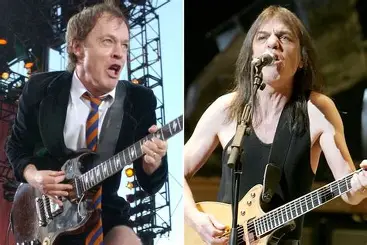
AC/DC — Angus & Malcolm Young
|
Mostly standard tuning; some recordings and live references may vary slightly by era or pitch reference. | Classic hard-rock rhythm proof that tuning is only part of the sound; right hand, muting, amp feel, and chord voicing matter heavily. | Treat AC/DC as primarily standard-tuning reference material unless verifying a specific song or recording. |
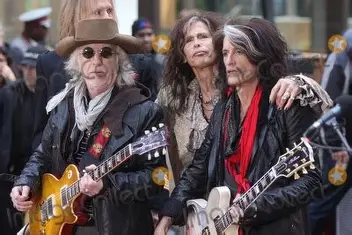
Aerosmith — Joe Perry / Brad Whitford
|
Mostly standard tuning with song-specific alternate, open, or shifted tunings. | Useful example of a classic-rock band where tuning choices change by song rather than one fixed system. | Verify by song; do not assume one Aerosmith tuning for the whole catalog. |
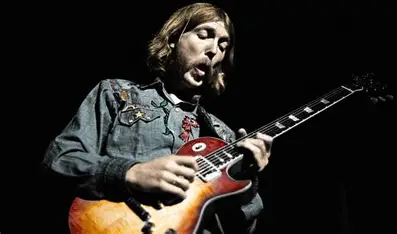
Allman Brothers — Duane Allman
|
Open E slide: E B E G# B E | Major-chord slide tuning with vocal-like phrasing and long sustain. | Open E increases tension compared with open D; setup and string choice matter. |
Billy Gibbons / ZZ Top
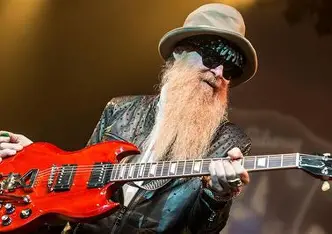
|
Standard tuning plus open E/open A-style slide vocabulary. | Blues-rock tone, compact phrasing, and slide parts that fit a working-player audience. | Gibbons is not one-tuning-only; verify the specific song or performance. |
Black Crowes — Rich Robinson
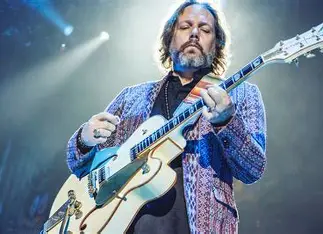
|
Open G and roots-rock open-tuning vocabulary. | Strong Southern/blues-rock open-G example for rhythm parts and big chord movement. | Black Crowes material is song-specific; open G is a major reference, not the only tuning. |
Black Sabbath — Tony Iommi
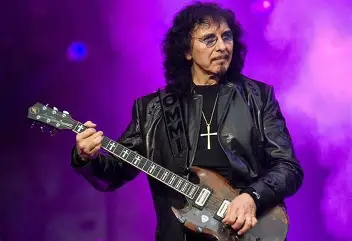
|
Lower tunings, including whole-step down and lower on some material. | Lower pitch, reduced tension, darker riffs, and early heavy-rock/metal influence. | Black Sabbath tuning varied by song and era. |
Blackberry Smoke — Charlie Starr
|
Open G: D G D G B D | Modern Southern-rock open-G vocabulary with roots-rock chords, riffs, and slide options. | Useful modern continuation of the Keith Richards / Rich Robinson open-G language. |
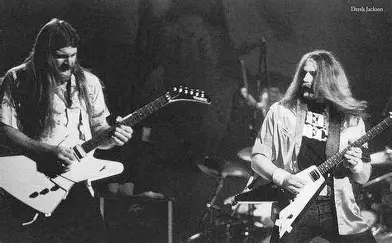
Dave Hlubek / Molly Hatchet
|
Mostly standard tuning for core material such as Southern-rock lead/rhythm parts. | Relevant to GLS visitors who play Southern rock and classic dual/triple-guitar arrangements. | Verify individual songs, but standard tuning is the practical starting point. |
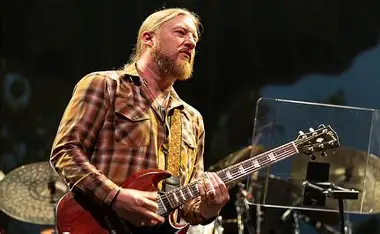
Derek Trucks
|
Open E slide: E B E G# B E | Modern master reference for open-E slide phrasing, sustain, and vocal articulation. | Dedicated slide setup and touch are essential to the sound. |
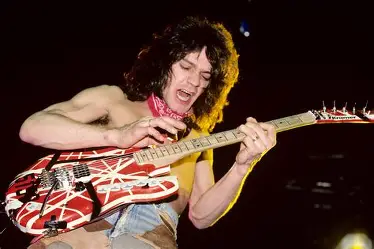
Eddie Van Halen
|
Often half-step down; some song-specific variations. | Slinkier feel, vocal fit, and classic hard-rock guitar range. | Van Halen material varies by track and era; verify the song. |
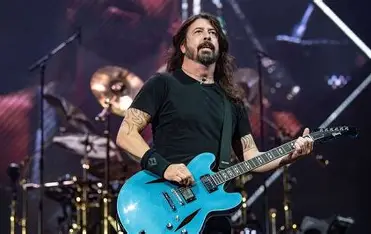
Foo Fighters — Dave Grohl
|
Standard and Drop D depending on song. | Big rhythm parts, lower roots, and simplified power-chord movement without becoming metal-only. | Multiple tunings across the catalog; check the track. |
George Thorogood
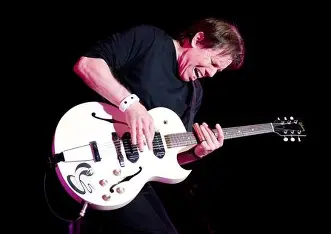
|
Open G and slide-oriented blues-rock tunings. | Practical bar-band/blues-rock relevance with strong slide vocabulary. | Verify by song; slide players often use more than one open tuning. |
Jimmy Page / Led Zeppelin
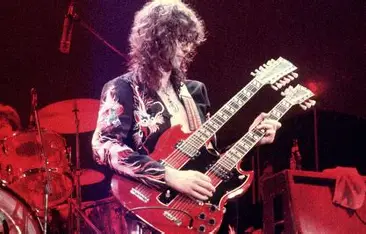
|
Standard, Drop D, DADGAD, open G, and song-specific altered tunings. | Classic-rock example of using the tuning that fits the song rather than one fixed approach. | Led Zeppelin material is song-specific; verify before performing or recording. |
Joe Walsh
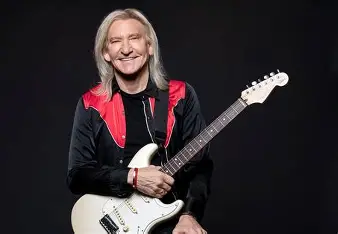
|
Open E slide examples: E B E G# B E | Blues-rock slide and open-tuning riff vocabulary in a classic-rock context. | Open E tension and slide action should be considered. |
Keith Richards / Rolling Stones
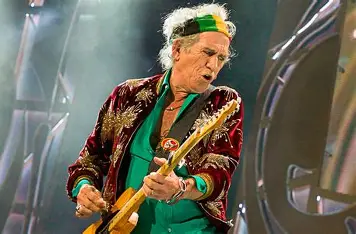
|
Open G: D G D G B D; often 5-string without the low 6th. | Defines many Rolling Stones-style rhythm parts and movable chord shapes. | Not every Stones song is open G; song-specific verification matters. |
Kiss — Ace Frehley / Paul Stanley
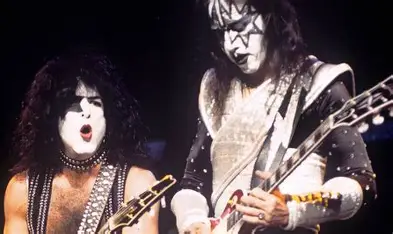
|
Standard and half-step down depending on era/song/live context. | Classic hard-rock example of using down-tuning for vocal range, stage feel, and guitar weight. | Verify by specific song and performance era. |
Lynyrd Skynyrd — Rossington / Collins / Gaines
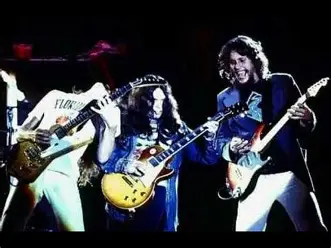
|
Mostly standard tuning for core Southern-rock material, with song-specific checks recommended. | Triple-guitar arrangements, phrasing, harmony lines, and touch are more central than exotic tuning. | Treat standard tuning as the starting point, but verify individual songs. |
Rage Against the Machine — Tom Morello
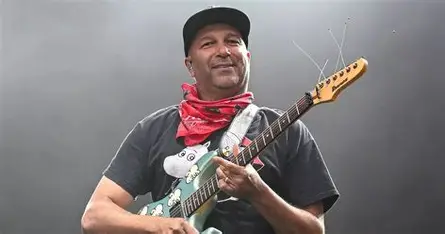
|
Drop D on key material; standard and other setups also used. | Low-string riff power with familiar upper-string shapes. | Do not assume every song is Drop D. |
Slash
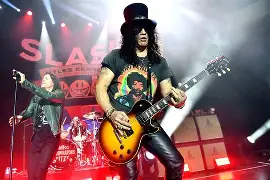
|
Often half-step down. | Lower vocal key, looser feel, and familiar hard-rock Les Paul response. | Common association, but check the specific recording or live version. |
Soundgarden — Kim Thayil
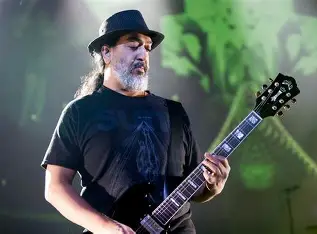
|
Drop D and other altered tunings. | Heavy riffs, unusual harmonic movement, and darker grunge textures. | Soundgarden used multiple tunings; verify the song. |
Stevie Ray Vaughan
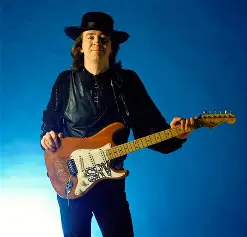
|
Half-step down: Eb Ab Db Gb Bb Eb | Big blues tone, heavy strings, lower pitch, and easier vocal range. | Strong association; string gauge, touch, and setup are just as important. |
System of a Down — Daron Malakian
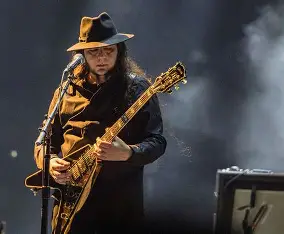
|
Drop C and lower hard-rock/metal tunings. | Tight low-string riffing and aggressive rhythmic attack. | Lower tunings usually need heavier strings and proper setup. |
Ted Nugent
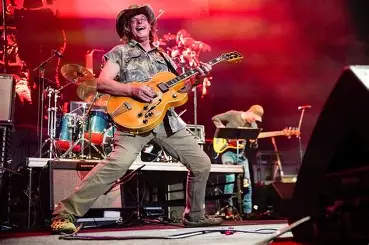
|
Mostly standard tuning: E A D G B E | Useful reminder that hard-rock punch often comes from attack, amp tone, muting, and phrasing rather than alternate tuning. | Cat Scratch Fever is commonly documented in standard tuning; verify other songs individually. |
Tom Petty / Mike Campbell
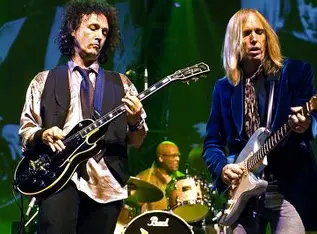
|
Mostly standard tuning with studio layering; Nashville/high-strung textures are relevant in this style. | Excellent reference for clean song-serving parts, layered acoustic/electric textures, and tuning discipline. | Not a one-tuning example; song and recording context matter. |
Tool — Adam Jones

|
Drop D and other drop/altered tunings. | Heavy low-string riffs, pedal tones, and complex rhythmic phrasing. | Song-specific tuning still matters. |
How Alternate Tunings Affect Setup
Changing tuning changes string tension. That can affect relief, action, intonation, nut slot fit, tremolo balance, and tuning stability.
| Change | Likely Setup Impact |
|---|---|
| Tune down half step | Usually minor, but relief and intonation may need checking if permanent. |
| Tune down whole step or lower | May need heavier strings, relief adjustment, nut slot review, and intonation correction. |
| Drop tuning | Low string may feel loose; intonation and nut slot fit may need attention. |
| Open E or other upward tuning | Increases string tension; watch neck relief, string breakage, and instrument stress. |
| Dedicated slide setup | May need higher action, heavier strings, and different nut/saddle targets. |
| Baritone conversion | May require different scale length, string gauge, nut work, saddle range, and intonation review. |
Important: If a guitar is kept permanently in a different tuning, it should be set up for that tuning. Retuning alone is not always enough.
How to Choose the Right Tuning
- For learning and general playing: use standard tuning.
- For easier bends and lower vocals: try half-step down.
- For heavy riffs without changing the whole guitar: try drop D.
- For slide and roots rock: try open G, open D, or open E.
- For acoustic drones and modal sound: try DADGAD.
- For modern metal: use drop tunings with appropriate string gauge and setup.
- For writing new ideas: try a tuning that breaks your normal chord habits.
GLS Permanent Alternate-Tuning Setup Checklist
If a guitar will live in an alternate tuning, the tuning should be treated as part of the setup specification, not an afterthought.
- Confirm the target tuning and whether it is temporary or permanent.
- Select string gauge based on tuning, scale length, playing style, and desired feel.
- Check nut slot width and depth for the selected strings.
- Check neck relief after the guitar is tuned to the final pitch.
- Set action for the player’s attack and the instrument’s fret condition.
- Check intonation in the final tuning, not in standard tuning first.
- Balance tremolo systems after tuning and string gauge are finalized.
- Set pickup height after the string gauge, action, and tuning are stable.
Setup disclaimer: Large tuning changes can alter tension enough to require setup work. Retuning alone may not produce reliable action, intonation, tremolo balance, or tuning stability.
GLS Final Take
Different tunings are not gimmicks. They are legitimate musical tools. A tuning can change the feel of the guitar, the available chord shapes, the low-end range, the usefulness of open strings, and the way a player writes.
The practical side matters: the guitar must be physically set up for the tuning. String gauge, nut slots, neck relief, action, intonation, tremolo balance, and pickup height may all need attention depending on how far the tuning moves from standard.
Gannon Luthier Services can help set up guitars for standard tuning, half-step down, drop tunings, open tunings, slide work, heavier gauges, baritone-style tunings, and dedicated recording/performance setups.
Frequently Asked Questions
Can I change tunings without a setup?
For small changes, often yes. For permanent tuning changes, lower tunings, heavier strings, slide setups, baritone tunings, or tremolo-equipped guitars, a setup check is recommended.
Does Drop D require different strings?
Not always. Many players use normal string sets for occasional Drop D. If the low string feels floppy or the guitar will stay in Drop D, a slightly heavier low string may help.
Is open E risky?
Open E raises several strings compared with standard tuning, increasing tension. Many players prefer open D with a capo at the second fret to get an open E sound with lower tension.
What tuning should I use for slide?
Open G, open D, and open E are common slide tunings. The best choice depends on the song, guitar, string gauge, action, and whether the guitar will also be used for normal fretted playing.
Why does my guitar buzz after tuning down?
Tuning down reduces tension. The neck may straighten, action may effectively lower, and the strings may vibrate in a wider arc. Relief, action, string gauge, and intonation may need adjustment.